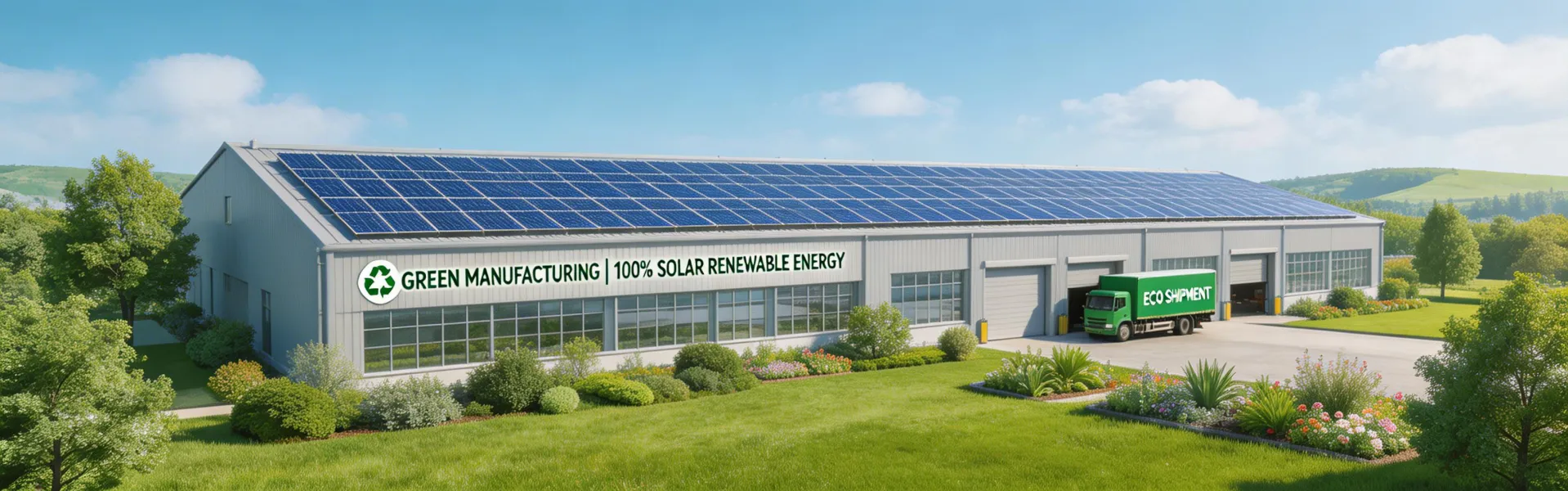
AirMaster Pro Sustainability Commitment
Engineering high-efficiency HVAC systems that reduce energy consumption, accelerate the transition to low-GWP refrigerants, and support our clients' decarbonization goals.
Engineering high-efficiency HVAC systems that reduce energy consumption, accelerate the transition to low-GWP refrigerants, and support our clients' decarbonization goals.
"We believe that the HVAC industry has both an obligation and an opportunity to lead the built environment toward net-zero carbon. Every system we engineer is designed to minimize environmental impact without compromising occupant comfort or operational reliability."
Measurable targets that guide our product development, manufacturing processes, and service operations.
All new product lines exceed ASHRAE 90.1-2022 minimum efficiency by 15% or more, with IPLV optimization for part-load conditions typical of real-world operation.
Transitioning our chiller and heat pump lines to R-454B and R-513A alternatives, with natural refrigerant (R-290, R-744) platforms under development for select applications.
Targeting a 30% reduction in manufacturing energy intensity by 2030 through facility upgrades, waste heat recovery, and on-site renewable energy generation.
The Kigali Amendment and EU F-Gas Regulation are driving a global shift away from high-GWP HFCs. The industry remains divided on the optimal transition pathway, and we believe our clients deserve a transparent view of both sides.
Proponents argue that natural refrigerants offer zero or near-zero GWP, proven long-term sustainability, no patent dependencies, and lower operating costs at scale. CO2 transcritical systems (R-744) are increasingly viable even in warmer climates, while ammonia (R-717) remains the most energy-efficient option for large industrial plants. However, natural refrigerants introduce flammability concerns (R-290 propane, A3 classification) and toxicity risks (R-717 ammonia), requiring enhanced safety systems, larger equipment footprints, and specialized technician training.
Supporters point to drop-in compatibility with existing infrastructure, lower upfront retrofit costs, no flammability or toxicity concerns comparable to naturals, and a faster adoption curve for the existing technician workforce. HFO blends like R-454B (GWP 466) and R-513A (GWP 631) offer significant GWP reductions over R-410A (GWP 2088). The trade-off: HFOs carry patent licensing costs, their long-term atmospheric decomposition products (trifluoroacetic acid) face emerging regulatory scrutiny, and GWP values, while lower, are not near zero.
AirMaster Pro currently offers both pathways: R-454B and R-513A platforms for commercial applications requiring drop-in transition, and R-290/R-744 platforms under development for industrial applications where charge limits and safety infrastructure can be met. We recommend selecting refrigerant strategy based on facility type, local codes, technician availability, and 15-year total cost of ownership analysis.
For medium-to-large installations above 100 tons, the choice between air-cooled and water-cooled chillers remains one of the most significant engineering and financial decisions. Neither option is universally superior.
| Selection Dimension | Air-Cooled Chillers | Water-Cooled Chillers |
|---|---|---|
| Typical COP Range | 2.8 - 3.5 | 5.0 - 6.0 |
| Installation Cost | Lower (no cooling tower, condenser water piping, or water treatment) | Higher (requires cooling tower, pumps, chemical treatment, basin heater) |
| Water Consumption | Zero | 1.8 - 2.4 gallons per ton-hour (evaporative losses + blowdown) |
| Equipment Life | 15 - 20 years typical | 20 - 30 years typical |
| Best Fit | Water-scarce regions, rooftop installations, facilities under 300 TR | Large data centers, process cooling above 500 TR, campus systems |
| Key Limitation | Performance degrades at ambient temperatures above 95F (35C); noise levels higher at close proximity | Requires ongoing water treatment and Legionella prevention protocols; cooling tower maintenance adds operational complexity |
Our engineering team provides lifecycle cost analysis for both configurations, factoring in local energy rates, water costs, maintenance budgets, and climate data to recommend the configuration with the lowest 20-year total cost of ownership for your specific facility.


Our engineering team can help you evaluate high-efficiency and low-GWP options that meet your facility's performance requirements and sustainability targets.
Request an Energy Consultation